004 – Starman
“He’d like to come and meet us, but he thinks he’d blow our minds” – Ziggy Stardust
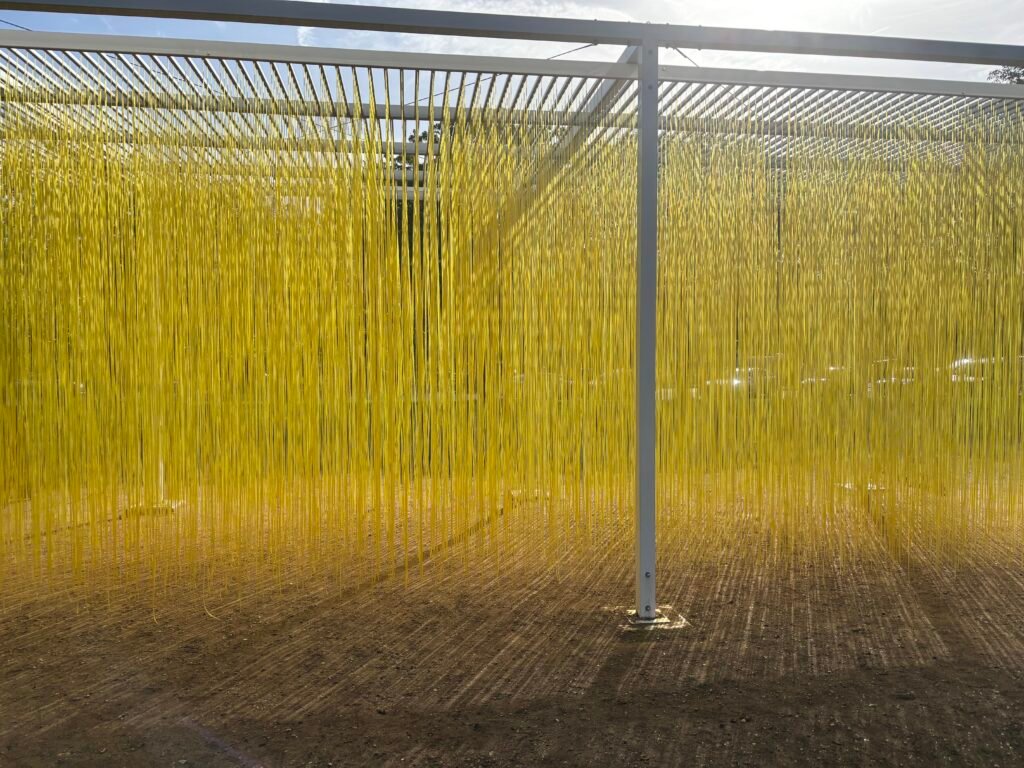
Day two of PDE in London seen us run through spaghetti and race boats in Hyde Park. Jesús Rafael’s outdoor sculpture, “Pénétrable BBL jaune“ immediately captures a sort of childlike need for exploration and wonder. I felt almost compelled to run through it as fast as I could (which, of course, I did, and it turns out PVC tubes whipping your legs does hurt). The sculpture is made of 4000 suspended yellow tubes, appearing to shimmer from a distance when observed at a distance. The piece was designed by Soto to be completed through participation, movement and touch.
One of my course mates channelled her inner Rapunzel and tried to braid the long yellow noodles, akin to fairy tales and Disney moves of old. However, this was shut down by a worker coming out in a chair. But, is that not part of the intention of placing the art outside and that of the artist? That accessibility and almost invitation to interact with it in a public space. If the piece was placed in the public space, is it not then the public’s right to interact with the piece as they see fit, now removed from the artist’s control as he surrenders it to the whims of the people? Obviously there’s an element of social expectations, unwritten rules made by the public (such as don’t steal, don’t deface, don’t eat, etc.) enforced strictly by social norms and shaming people on social media. Can a case be made that braiding the sculpture was just as much of an artistic expression as making the piece itself?
Walking on gets us to London Science Museum, across from the Victoria and Albert (don’t worry I’ll get there soon). The building almost feeling too large and seeming to go on and on and on. The exhibit that engaged me the most by far was almost tucked away at the end of the maze, the space and humanity exibits. The latter featuring a large amount of interaction, which scratches the kinaesthetic learner in me. After seeing fusion reactors, and racing sperm cells, I navigated to the space section.
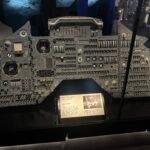
I’ve never been one to be totally obsessed with space and the moon landing, however, seeing an Apollo landing capsule that has literally been around our moon is pretty cool. I was head over heels for the almost retro consoles and the iconic shapes and silhouettes of the rockets on display. To bring back my earlier point, I can believe I didn’t pay anything for my eyes to be given such a treat. I know there’s an argument to be made about taxpayer money, and I technically have paid for this in some way. But I’m stuck in front of a piece of the actual moon, and I’m not paying attention right now.
Keeping this accessible is so critical to not only inspiring people like me but also those younger, those with less opportunity and more difficulties. The only way for this knowledge to be passed on is for it to be given to all.






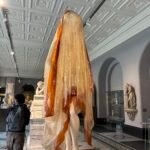
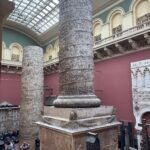
To carry on this point, we went to the Victoria and Albert Museum. British museums are of course no stranger to scrutiny, whether it’s the British museums and their hoarding of Egyptian items, or the V&A themselves (staff strikes, racial profiling of school trips and racism in senior staff). However, the power of museums cannot be understated. Personally I was blown away by some of the exhibits on display. The scale of Trajan’s Column, the impressiveness of Bharti Khmers ‘Ghost ’, and the wealth of design on display (personal highlights range from a map of the London Underground to a Nigerian football kit, an Apple 2 to a lost Mary vape).

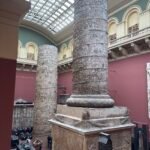



Later that night I attended a comedy show; one of the acts had a bit about British museums and the fact they’re not keen on giving back stuff. I won’t try to retell it because I’m nowhere near as funny as they were. But one of the points was that they liked going to see Egyptian stuff, but not going to Egypt to see it. If British museums were filled with British stuff, then would we want to spend our weekends there? Should these cultural artefacts be made less accessible so they can be returned to their homeland, or should they be kept here, where museums have done a decent job of preserving them and exhibiting them to a foreign crowd?
This has been a bit of a long one, and I feel like I’ve asked a lot of questions without giving any answers. To be honest, I’m still thinking about it, and I’m using this as a way to get it off my shoulders and onto yours. I think there’s too much nuance here about the cost of accessibility and ownership. Not sure if squatters’ rights apply to the Rosetta Stone.
Referances